


How Premium Perfume Creation Shapes Modern Lifestyle
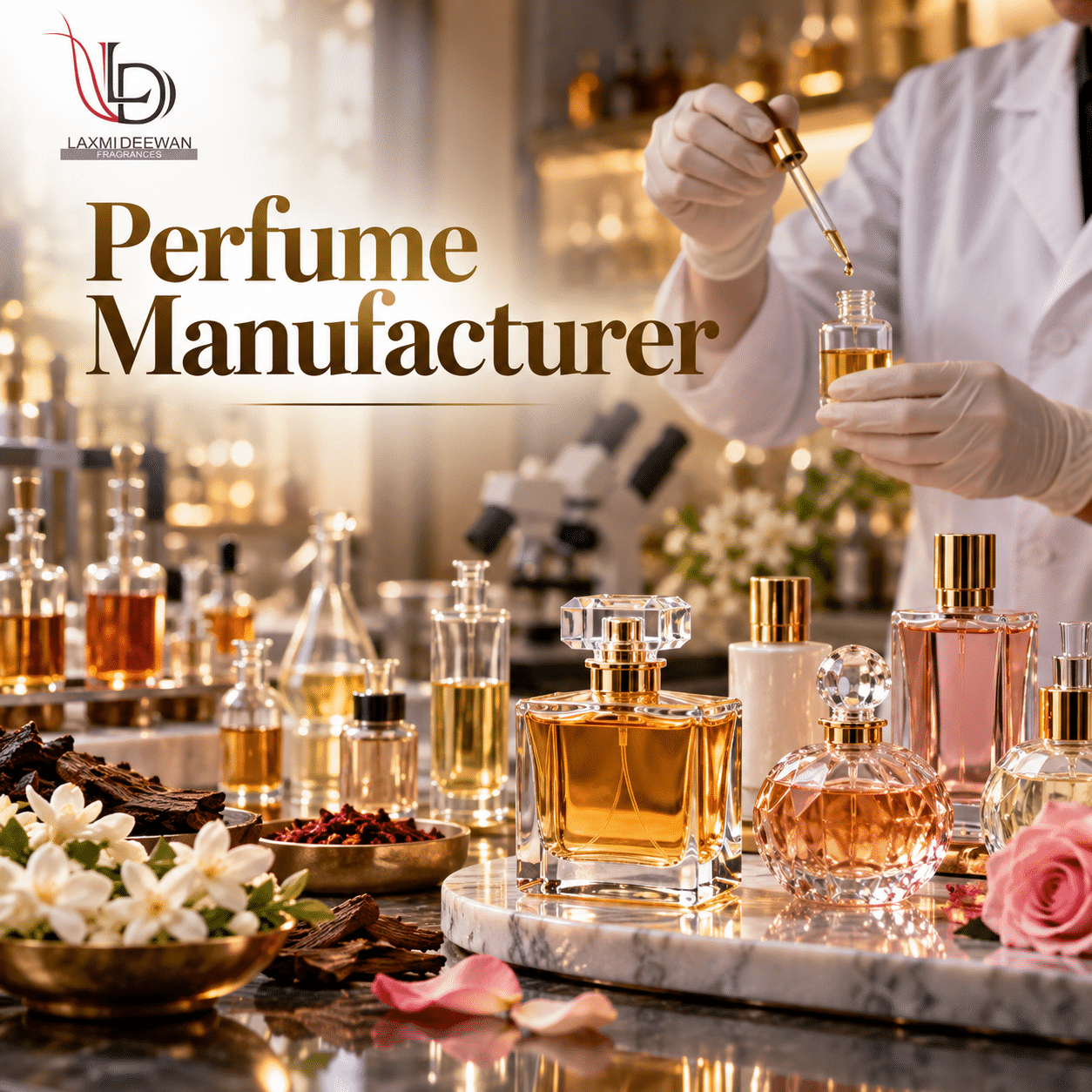
Perfume Not just pleasant to the nose, excellent fragrances become intrinsic to a product, influence the tone of association that consumers have with a brand and evoke powerful associations with that product or experience. Behind every great perfume there is science – ingenuity, ingredients, skills, testing, manufacture and quality.
This is where a Perfume Manufacturer comes in. Manufacturers take the fragrance ideas of a business and develop it into a finished product, using a detailed fragrance formulation and production process. The manufacturing process may incorporate anything from bespoke fragrance creation to private label manufacturing, perfume oils, body sprays, Eau de Parfum, Eau de Toilette, attars or any other type of fragrance.
When fragrance brands look for manufacturing partners to take their product to market, there’s a lot more to the equation than just the price of a product. At the end of the day, formulation, raw-materials, stability, consistency, testing, customization, production and packaging support will all have an impact.
Laxmi Deewan Fragrances was incorporated in 2010 and is working in the field of fragrances for varied applications. The business of Perfume Manufacturer also encompasses fragrant concentrates for fine fragrance compositions and products in addition to fragrances intended for personal care, hair care, fabric care, home care, air Care, babycare, and other applications.
What Is a Fragrance?
A Perfume Manufacturer that creates, develops, produces, evaluates, and sometimes packages finished perfume commodities for brands, companies, retailers, and other entities.
Initially the work can start with a simple perfumer’s idea or product brief. Perfumers and other specialists will then develop the blend to fit the brand personality, application, market and product.
A professional manufacturing operation may support several stages, including:
- Fragrance concept development
- Scent formulation
- Selection of fragrance ingredients
- Sample preparation
- Product compatibility testing
- Quality assessment
- Bulk manufacturing
- Filling and packaging
- Labelling
- Final dispatch
The exact process depends on the type of perfume and the requirements of the business.
For example, a Perfume Manufacturer developing a premium perfume may require a sophisticated signature scent, while another business may require a larger-volume fragrance suitable for everyday products. The formulation and production approach can therefore vary considerably.
Different Types of Perfume Products
A Perfume Manufacturer may work with several fragrance formats depending on the intended application.
| Perfume Type | General Characteristics | Common Application |
| Eau de Parfum | Higher fragrance concentration and strong presence | Premium perfumes |
| Eau de Toilette | Lighter fragrance concentration | Everyday fragrances |
| Perfume Oils | Concentrated oil-based fragrance format | Personal fragrance |
| Attars | Traditional concentrated fragrance format | Traditional and contemporary perfumery |
| Body Mists | Lightweight and refreshing | Personal care |
| Body Sprays | Convenient spray application | Daily grooming |
| Custom Scents | Developed around specific requirements | Brand-specific products |
The selection depends on factors such as desired performance, product positioning, formulation requirements, packaging, and intended customer experience.
Benefits of Working With a Professional Perfume Manufacturer
1. Access to Fragrance Expertise
How to create a balanced perfume A perfume composition needs knowledge of fragrance ingredients, perfumes, formulation techniques, and performance of a perfume. The perfumer, who has created a perfume with many years of experience, will blend the notes into a perfume.
The knowledge of the formulators can also help companies turn an idea into a real-world fragrance brief.
2. Customized Fragrance Development
Not all businesses require a stock fragrance. Some brands require a fragrance that will work with the brand concept, consumer requirements and the brand personality.
Most Professional Perfume Manufacturer can manufacture samples from the Fragrance Brief and make modifications on each sample according to the feedback before it reaches the final profile.
Customization may involve characteristics such as:
- Floral
- Citrus
- Woody
- Oriental
- Fresh and aquatic
- Spicy
- Musk-based
- Oud
- Traditional Indian fragrance profiles
3. Consistent Production
Consistency is critically important with products that consumers buy repeatedly. Customers want to be able to count on a product’s fragrance profile from batch to batch.
Controls over production, precision measurement, procedures, and quality controls at batch level could help overcome the variations in production.
4. Quality Control
Perfume Manufacturer well established quality-control process will identify these discrepancies before entering the market. The assessment for quality may be based on any or all of the following aspects, depending upon the nature of your product – strength, uniformity, stability, shelf-life and compatibility.
However, we also need to be sure the finished formulation will behave as we want it to.
5. Flexible Production
Every firm has their own specific requirements of manufacturing. For example, a fresh new brand might require only a small quantity initially however an established corporation might be requiring them in somewhat larger quantities.
It’s much more straightforward to build a product and scale up your business when you are working alongside a manufacturing partner who can scale up to accommodate your needs.
6. Reduced Manufacturing Investment
To establish your own manufacturing business, you will require good facilities, machines and technical know-how, raw materials, quality-control measures and workforce.
Once you deal with a manufacturer having an existing plant, you can reach manufacturing capacity without the headache of building your own plant.
The Perfume Manufacturing Process
Typical steps involved in the production of a professional perfume are as follows. The process steps can vary depending on the fragrance type, format of the product and formulation.
Step 1: Consultation and Product Brief
Understanding of the product requirements.
The business can include the following information: target audience, target scent profile, product category, preferred scent concentration, packaging specifications, and target market.
Detailed brief to base the perfumer on.
Step 2: Fragrance Formulation
The perfumers now begin to create the fragrance by adding the ingredients and the selected fragrance materials.
A perfume can have very different aromas depending on the mixture used. The perfumer has to have in mind the interaction of notes in the composition as well as the way the perfume develops over time. You may need to do a couple of revisions in order to arrive at a suitable sample.
Step 3: Sample Development
The samples help the business to test out the scent before mass production.
By this stage, feedback is now needed. The Perfume Manufacturer may ask for changes to fragrance intensity, freshness, sweetness, warmth, longevity or particular notes.
It can then be altered according to the requirements agreed.
Step 4: Testing and Compatibility
We test to ensure that the fragrance meets the right conditions. Compatibility is crucial for products that will be used in a variety of bases, or applications. Just because a fragrance works with a perfume, doesn’t mean it will work in a cream, shampoo, soap, etc.
Stability and performance tests are thus an important aspect of responsible product development.
Step 5: Bulk Production
Once the formulation has been approved then it is ready for production and bulk manufacture.
Accurately measured ingredients and a good manufacturing environment you get the right formulation and batch consistency. Production Volume depends on the business requirements and agreed manufacturing schedule.
Step 6: Quality Control
The final batch is tested to meet the specifications.
The quality-control system could be looking at:
- Fragrance profile
- Consistency
- Strength
- Stability
- Performance
- Appearance
- Batch uniformity
These tests validate that the sample is consistent with the formulation that was previously approved.
Step 7: Filling and Packaging
Once the agreed service has been completed the finished perfume will then be bottled and filled.
Packaging can refer to bottles, caps, boxes, labels, sleeves and other branding. It can help fill and package the product for presentation purposes and also, of course, for safety.
Step 8: Final Dispatch
The specific procedure will vary based on the perfume and business needs.
For instance, a Perfume Manufacturer who produces a luxury perfume may need a complex signature perfume, while another one may need a more generic perfume which is integrated in a larger production volume. So the formulation and manufacturing method can differ widely.
Factors to Consider When Selecting a Perfume Manufacturer
Selecting a Perfume Manufacturer You need to be careful when selecting a manufacturing partner. Avoid marketing talk and get to the facts about what the manufacturer can and cannot do.
Experience and Technical Knowledge
A bit of industry experience will help you with the formulation side of your business, possible manufacturing issues, raw materials, testing, consumer preferences. Knowing the age of the company and the range of scents they create can be helpful.
Customization Capabilities
Does the company have a custom formula and sample creation if the business needs a special scent. Fragrance composition modification may be necessary for creating a unique identity.
Raw Material Quality
Ingredient quality may affect the finished fragrance profile and product performance. The firm should have valid procedures to obtain, treat, store and select fragrance materials and other substances.
Quality-Control Procedures
Inquire about testing of batches and quality control. A controlled quality-control process can minimize variations and confidence in the final product.
Production Capacity
Production capacity must equal present and future demand. A Perfume Manufacturer ready to meet the growing demand can assist companies to avoid the needless interruption when the range increases.
Packaging Support
Certain businesses might need more than fragrance creation. Others might just need help with bottles, boxes, labelling, filling, and packaging. Knowing all the services that the manufacturer offers can make things easier to build.
Why Choose Laxmi Deewan Fragrances?
Laxmi Deewan Fragrances has been providing fragrance solutions to the aroma industry since 2010. According to their site the company offers its fragrance solution in the field of fine fragrance, personal care, hair care, fabric care, air care, home care and others.
The company mentions the different perfumes services they provide for perfume needs as: Fragrance formulation, samples, sensitivity testing, bulk formulation, quality control, filling, labelling and packaging. The company states Eau de Parfum, eau de toilette, perfume oils, Attar, body mist, body sprays, as well as designer signature perfumes are some of the fragrance forms they have in stock.
Expertise Across Multiple Fragrance Categories
What else does a general portfolio of fragrances such as Laxmi Deewan’s consist of? – Premium fragrances for the cosmetic and homecare industries – Personal care products, hair care products, fabric and homecare products, air care products and other product categories.”.
Custom Fragrance Development
The company explains a development approach predicated on understanding the client’s needs, creating fragrance samples, using feedback and adjusting the formula.
This strategy could help those companies that want to create a unique smell rather than choosing a fragrance on the market.
Focus on Consistency and Quality
As detailed by Laxmi Deewan, the manufacturing process she recommends for stability testing of deodorant under test safety fragrance must pass tests and safety specifications for strength, consistency, and duration. Controlled production and testing is to help ensure repetition from batch to batch.
Private Label and White Label Options
If you need a quicker route to market, private label or white label manufacturing offers an option of ready-to-pack fragrances with potential branding and packaging options, depending upon the type of manufacturing supply agreement.
Location and Business Support
Laxmi Deewan Fragrances Is a prominent manufacturing and developing fragrance company in Sector 63, Noida, Uttar Pradesh. Use the given contact details to contact the customer-care executives and business enquiry executives of the fragrance company and discuss your fragrance requirements.
Perfume Manufacturing for Different Business Needs
A Perfume Manufacturer can work with different types of businesses depending on their product requirements.
These may include:
- New perfume brands
- Cosmetic companies
- Personal-care brands
- E-commerce businesses
- Boutique perfume companies
- Lifestyle brands
- Corporate gifting companies
- Hospitality businesses
For a new company, manufacturing support offers a smooth transition from fragrance concept to finished product. For a more mature brand, manufacturing support helps with product-line extension and new fragrance identities.
Conclusion
A Perfume Manufacturer is not just about making a perfumed liquid. An expert manufacturing partner can play a big part in developing, formulating, testing, quality control, manufacturing, filling, and packaging your fragrance.
The process to design a cosmetic with a new business, from the product brief to the formula to sampling and testing, to manufacturing and final quality evaluation when you make the choice of a partner, check the technical skills, the level of customization, the quality of the ingredients, the production capacity, the consistency of production and the packaging possibilities.
Laxmi Deewan Fragrances Provides expertise in the area of fragrance development and manufacturing with the opportunity of both fine perfumes along with several personal-care, home-care and alternative uses. Perfume manufacturing services include bespoke fragrance development and testing, manufacturing, quality control and packing.
By having a clear framework to adhere to, perfume manufacturing companies can produce perfumed products that are authentic, reliable, finished, appropriate for their market, and suitable for their product.
Frequently Asked Questions
1. What does a Perfume Manufacturer do?
A Perfume Manufacturer creates and produces a perfume through activities like the perfume creation, sampling, testing, bulk manufacturing, quality checking, filling and packaging. Services provided by the us may differ based on the manufacturers’ facilities and client’s requirements.
2. Is it possible for a perfume manufacturer to produce a unique perfume?
Yes. Some of the manufacturers that offer formulation and perfumery services offer a custom fragrance development service. It would typically start out with a product brief. Then it would be sample development, samples tested, feedback, reworking and refining, then final approval.
3. In what perfume types can be produced?
Products can be for some factories Eau de Parfum, Eau de Toilette, perfume oil, masson, body mist, body spray, and customized fragrance products.
4. Why is quality control necessary in the perfume production?
Consistency controls ensure consistency between batches and test significant qualities such as fragrance profile, strength, stability and performance. Consistency controls are especially important if a fragrance is developed for a brand where customers will buy it time and again.
5. What questions should I consider before Selecting a Perfume Manufacturer?
The following questions are helpful to ask a Perfume Manufacturer: Do you have manufacturing experience, capabilities, and experience with customization? What raw materials do you use and how are they tested? Do you perform quality checks?
 Home
 Whishlist
 Compare
 Checkout
 Account